
PPC Company in Jaipur: How to Evaluate Campaign Performance

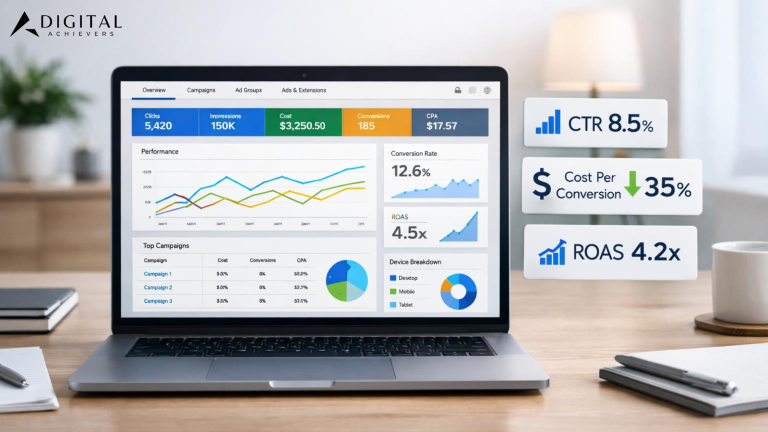
A paid campaign can produce thousands of impressions and still fail to bring suitable customers. It can also bring a smaller number of valuable enquiries that never look impressive in a reach report. When reviewing a PPC company in Jaipur, begin with the business result and work backward through the numbers. The right question is not simply how many clicks were bought, but whether the campaign helped the right people take a useful action at a sensible cost.
Evaluation is easier when you agree on the objective before the campaign starts. A store may want profitable orders. A service business may want qualified calls or booked consultations. A new brand may first want relevant awareness, with a later stage designed for enquiries. Those goals require different creative, landing pages, and measures. Mixing them into one headline score makes it hard to decide what to change.
Define a conversion worth counting
A conversion is an action you choose to measure, such as a purchase, submitted form, phone call, or booking. Google Ads supports different conversion actions, including web and call actions. The important step is deciding which actions genuinely indicate progress. A button click is easier to count than a sale, but it may include accidental taps and people who never complete an enquiry.
For lead generation ads in Jaipur, distinguish all enquiries from qualified enquiries. A qualified lead might be someone in the service area, asking about a service you actually provide, with a plausible need and a way to contact them. Record why leads do or do not qualify. That feedback helps the agency adjust search terms, location settings, ad wording, and landing page content.
Agree on the conversion definition in writing. If the sales team counts a WhatsApp conversation as a lead but the advertising dashboard counts every WhatsApp button click, reports will disagree. Neither number is automatically wrong; they answer different questions. A useful report labels them clearly.
Check the measurement setup before judging results
The PPC team should test every route a customer can take. Does a submitted form trigger one conversion, not two? Does the thank-you page load? Are phone calls from ads measured where possible? Are purchases recorded with appropriate values? Can the team tell which campaign brought an enquiry without collecting more personal data than necessary?
Tracking is never perfect. Consent choices, browser settings, cross-device journeys, and offline conversations can leave gaps. A trustworthy provider explains those limits and compares platform data with business records. If the dashboard shows many conversions but staff cannot find the matching enquiries, investigate the event setup before increasing the budget.
For longer sales cycles, connect advertising results to the customer relationship process. Note which leads reached a meeting, proposal, or sale. Even a simple shared status field can reveal that one campaign produces fewer leads but better-fit prospects. Make sure the people entering this information use the same definitions.
Read the funnel, not a single metric
Impressions show how often an ad was displayed. Clicks show visits or interactions. Click-through rate describes the share of impressions that became clicks. Cost per click shows what an average click cost. These are useful diagnostic measures, but none says whether the click was worth buying.
Conversion rate asks what share of visitors completed the chosen action. Cost per conversion divides ad spend by the number of tracked conversions. For a business, cost per qualified lead may be more useful: total campaign spend divided by leads that meet agreed criteria. When a purchase has a reliable value, the team can compare revenue attributed to ads with ad spend, while remembering that attribution may omit some later or offline sales.
Interpret metrics together. A high click-through rate with few enquiries may signal that the ad promises something the landing page does not deliver. A low conversion rate may point to an unclear offer, slow page, weak trust signals, or a form that asks too much. A low cost per lead is not a win if most leads fall outside the service area. A high cost per click can still be acceptable when the resulting customers are valuable enough.
Separate campaign problems from landing-page problems
An ad is only the first step. The landing page must continue the same conversation. If an ad mentions a particular service, the page should explain that service rather than send people to a broad home page. Visitors should quickly see who the offer is for, what it includes, credible supporting detail, and how to proceed. Contact options should work well on mobile.
Ask the PPC company to review search terms or audience signals and the page experience together. If irrelevant visitors are clicking, targeting or ad copy may need work. If suitable visitors arrive but do not act, the page or offer may need work. If forms are submitted but staff do not follow up promptly, the advertising team alone cannot solve the problem.
Small tests are more informative when only one main variable changes at a time. The team might compare two headline approaches, a shorter form, or a clearer call to action. Record what changed and the reason for the test. Avoid claiming a tiny difference is proof when the campaign has too little data.
Understand budget and fees
Ask for a clear split between media spend paid to the ad platform and the fee paid to the agency. The scope should explain setup, creative, account management, landing-page work, tracking, and reporting. Confirm who owns the advertising account and who can access historical data if the relationship ends.
A budget discussion should start with business economics. What is a customer worth after delivery costs? How many qualified leads typically become customers? What level of spend can the business sustain while learning? These figures help set a sensible test budget, but they do not create a guaranteed result. A pay per click agency in Jaipur should be able to explain the assumptions behind its recommendation and revise them when actual lead quality is known.
Review spending pace as well as totals. A campaign that uses most of its budget before the team checks lead quality may waste learning opportunities. Conversely, a campaign with very little delivery may need a wider audience, a different bid approach, or better ad and page relevance. The explanation should be specific to the account, not copied from a generic report.
Diagnose common performance patterns
Different patterns call for different questions. If ads receive impressions but few clicks, review whether the message is clear to the audience that sees it. If clicks arrive but useful enquiries do not, inspect the landing page, offer, and conversion tracking. If enquiries arrive but staff reject many of them, review targeting, qualification wording, and the first response. If qualified leads arrive but few become customers, look at sales follow-up and pricing fit before changing the ad again.
These are starting hypotheses, not automatic diagnoses. A campaign may have several issues at once, and a small data set can make ordinary variation look dramatic. Ask the agency to show the evidence behind each proposed change. It should be able to explain why a search term was excluded, why an ad was rewritten, or why the landing page needs a different answer. Keep a change log so the business can compare later results with what actually changed.
Segment results where the business decision requires it. For example, compare service categories, locations that can actually be served, and enquiries during hours when staff can respond. Avoid splitting a modest campaign into so many tiny groups that none has enough data to interpret. The purpose of segmentation is to reveal useful differences, not to make the report look more detailed.
Questions for the monthly review
Ask which campaigns produced qualified enquiries, what those enquiries cost, and what happened after the initial contact. Ask what the agency changed and why: search terms excluded, ads rewritten, audiences refined, landing pages improved, or tracking fixed. Ask which test will run next and what result would cause the team to keep or stop it.
The report should also state what it cannot conclude. If purchases happen mostly by phone and the sales team does not record source information, return on ad spend may be an estimate. If a campaign has just started, the data may be too thin for a confident decision. This honesty helps a business choose the next sensible action.
When comparing providers, look for a team willing to discuss lead quality with your staff, not only platform metrics. The Digital Achievers can be one starting point for that conversation. Bring your current campaign reports, a sample of recent enquiries, and your sales process so the review can focus on outcomes rather than impressive-looking numbers.